
Study sites in cropland
Study sites in grazing land
Study sites in forests
Local off-farm jobs period (1980 to 2000)
| Author: | Rosanna Salvia |
| Coordinating authors: | Constantinos Kosmas, Giovanni Quaranta |
| Editors: | Alexandros Kandelapas, Jane Brandt |
Editor's note 20Mar14: Source D132-5.1.
Assessment of natural, economic and social capitals
| Natural capital | |
| Assessment | The climate quality index (CQI) in this period is 1.44 (moderate) and is uniform throughout the SES.
The soil capital shows no significant change, retaining its predominately moderate value. The value of water capital increases substantially to very high, after the construction dams in the 1980s and 1990s, solving problems of water availability and quality. Vegetation capital is generally moderate or very high. |
| Critical functions | Primary production is characterized by serious problems linked to the introduction of a new, more productive oil cultivar (Leccino). This cultivar produces lower quality oil and brings a range of phytosanitary problems to the area, forcing farmers to increase the use of pestisides. Furthermore, the diffusion of irrigation systems in intensive olive farming areas creates the problem of precocious enlargement of the drupes, which subsequently attracts more insects leading again to increased use of pesticides.
The construction of a series of dams significantly impacts on the hydrological cycle, however, a quantitative assessment is not available. |
| Critical variables | The fastest environmental variable is water capital. The construction of the series of dams increases the quantity and quality of water available in the SES. Vegetation capital increases due to the diffusion of irrigation farming. Soil and climate components do not register substantial changes. |
| Economic capital | |
| Assessment | GDP at factor cost (1991) is €499.15 million, equal to about €11,000 per capita. Although the numbers of people in employment remains fairly stable, employment in agriculture sees a sharp decline.
Substantial financial resources are pumped into the area under the interventions from the Cassa del Mezzogiorno and later by Territorial Pacts. Agricultural subsidies are high at the beginning of the period due to the presence of olives and cereals. The value of landesque capital increases substantially in the period, owing to investment in six dams, progressive substitution of surface irrigation with sprinklers, drip irrigation and micro-irrigation. Physical capital remains at a medium value level for the entire period. Reductions in arable land, livestock (bovine) farming and intensive farming are compensated by increases in farms with permanent crops and higher quality of structures used in farms. The amount of mechanized equipment in farming continues to increase but actual use of agricultural machinery does not follow the same trend. This is due to the nature of subsidy schemes because increased machinery capital is not necessarily translated into mechanization or changes in cultivation practices. The diffusion of more sophisticated irrigation methods also adds to the increase in technology to moderate.
The greatest plant capital values are seen in the pastures, meadows and woodland which extending over an area of 19,650.68 ha, 19,335.74 and 16,627.59 respectively for the years 1982, 1999 and 2000. |
| Critical functions | The drive towards increased production and intensive farming practices persists. The relative value of agricultural production continues to decline in relation to other productive sectors. |
| Critical variables | Produced capital increases thanks to increased agricultural production. Landesque capital undergoes a substantial transformation due to the diffusion of irrigation networks and the construction of the dams. The new model of intensive agriculture and irrigated farming also increases the level of technology. Financial capital changes less rapidly than in the previous period due to the stability in subsidy level which compensates for reductions in remittances. Access to credit increases. |

| Social capital | |
| Assessment | Population figures remain fairly constant. Migration dynamics remain fairly stable and principally concern internal migration with residency changing from one township to another. Literacy and education levels increase.
As far as cultural capital is concerned, this period is a "settlement" phase involving a certain cultural awakening. From the beginning of the 1990s, re-discovery of old traditions and values expands including research into local culture and traditions, continuation of those traditions and greater environmental awareness and conservation, particularly with regard to tourism. The constitution of the National Park of Cilento and Vallo di Diano, the LEADER program and recognition of PDO (Protected Denomination of Origin) status for Cilento olive oil, all promote the significant natural value of the local area and give the community impetus to protect the rural landscape. This cultural shift spills over into the tourism industry, as the development of inland areas leads to a re-branding of the area from coast-only mass-tourism to a destination with local traditional products and customs. This shift is centered around the concept of the "Mediterranean Diet", following related research and experiments conducted in Cilento itself. Beyond its nutritional value the diet entails cultivation practices, food processing and preparation methods, consumption habits (days of rest, holidays etc) as well as landscape and resource conservation and professional activities. The degree of connectedness including the quality and quantity of networks and communication between stakeholders is marked by two developments in the early 1990s:
The territorial pact represents a significant manifestation of social capital but also a completely new form of institutional capital: created in the aftermath of several decentralisation reforms (1990-1993) it entails a bottom-up approach to local planning. Beginning in 1995, the Territorial Pacts (TP) are "contracts" signed by the public administration and townships in a given area to direct private and public investment. Two pacts cover the study site: the General Territorial Pact of Cilento and the Specialised Territorial Pact for Agriculture and Fishing of Cilento. Although several public works are financed through pacts, in stake-holder workshops in the Alento area it is pointed out that often local communities lack strategic vision and excessive financial weight is given to infrastructure for agriculture which proves fruitless due to high management costs. |
| Critical functions | (See social capital discussion) |
| Critical variables | The components of social capital remain stable after the great transformation in the previous period. Demographic capital is also stable as out-migration slows. Cultural capital and social capital are also fairly stable. Institutional capital, on the other hand, can be considered a fast variable. The creation of the National Park of Cilento and Vallo di Diano introduces a new level of governance to the SES and the implementation of negotiated planning substitutes the centralised governance model. Both developments rapidly and significantly impact the Alento SES. |
The main LEDD problems and responses
During interviews, local stake-holders and particularly farmers, point to the emergence of the problem of poor maintenance of dry-stone terraces and, as a result, the rate of soil erosion increases. The high rates of land and farming practice abandonment from the previous years begin to show their effects.
Although mechanization and the reduction in manual labour is viewed as a means to increase competitiveness in the agricultural sector (particularly olive farming), it becomes a negative response as it accelerates the process of dismantling of terraces and, at the same time, increases soil compactness with positive feedbacks on LEDD.
Other responses include the intensification of crop systems through the enlargement of surface under cultivation and the planting of new olive groves on low-lying land often including the introduction of new cultivars. These responses have proved negative in that they favoured the low maintenance or total abandonment of traditional terraced olive groves in-land and exert increased pressure on cropland on the plains. Subsides from EU CAP are a positive response, supporting the maintenance of olive groves in-land where costs of production have begun progressively to diminish profitability.
Soil sealing is another serious problem in the area. The increase in compact urban areas in terms of surface is more contained than the previous period whilst diffuse urbanisation increases by 65% due to persistent pressure from the tourism sector and the continuing trend for the construction of independent houses.
The founding of the Park goes some way to containing construction, with strict constraints on soil and water resource consumption for buildings not providing essential public services. Many people, particularly those involved in construction view the Park as a huge obstacle.
In the early stages of the implementation of the Park Plan those areas with no local planning regulations see a complete suspension of building works. This ensures that all town councils in the area swiftly adopt urban planning regulations.
Policy context
AK: to check that implementation, impacts and effectiveness of selected policies are discussed in this text. Look at D142 to see if there is any additional information.
The main policies in effect during the period relate to agriculture, and particularly olive oil and cereal subsidies in the context of the Common Agricultural Policy.
In 1985, the new national agricultural program provide 16.500 billion lira for the 1986-1990 period. Under EEC Regulation no. 2261/84 olive oil producers are differentiated according to average production, with large producers (more than 500 kg of oil per year – initially 100 kg) receiving a subsidy in direct proportion to the amount they produced. Small producers (less than 500 kg – initially 100 kg) receive aid per tree. This regime gives rise to widespread fraud in Alento and throughout the EU.
Initial reforms to the system focus on applying the production subsidy to all producers (notwithstanding the fact that 60% of farmers received the tree payment). The shift results in a considerable loss of income for small producers, since low-input farming, as practiced in Alento, includes years of poor harvest (normally every second year in dry land olive farming).
Throughout the 1990s interventions focus on the modernisation olive farming and the rationalisation of groves. Funding is also made available for the purchase of equipment to facilitate harvesting and introduce mechanization (direct support for investments). These interventions have significant impacts on processes of degradation, as has already been described. Restrictions on imports from outside the EU continue.
Attempts at reform since the late 1990s have been hampered by the lack of an adequate olive data-base which has repeatedly hampered the effective management of the CAP regime.
Support regimes for arable crops change drastically in 1992 (MacSharry reform), including a shift from production subsidies to area payments. The de-valuation of the lira at that time produces a system of over-compensation for cereal production.
In the 1980s a new process of integration between agriculture and tourism begins which represents a response to the loss of competitiveness of the sector and, therefore, an alternative solution to preserving agriculture in marginal areas and those areas most at risk of LEDD as well as providing a response to the growing awareness of sustainability and environmental concerns by consumers. The Park promotes the diffusion of agri-tourism as a sustainable use of the local territory. In the Campania region agri-tourism is first regulated by regional law in 1984 which supports initiatives to improve tourism infrastructures in rural areas and in the vicinity of archaeological sites, to produce and market local products, to preserve local traditions. These changes and policies run parallel to negotiated planning.
Properties of the system
AK: to check if there is any further relevant information in D133
Natural capital: Potential available for change remains relatively stable and at moderate levels.
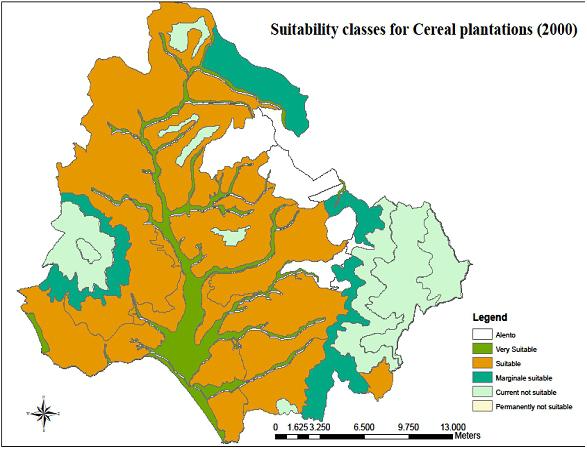

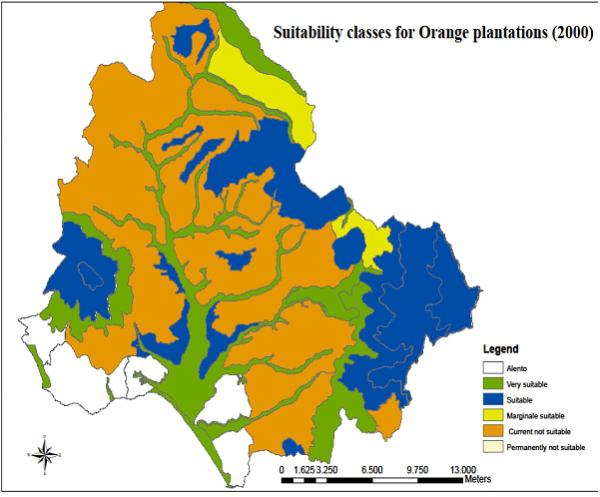

Robustness also remained predominantly moderate.


Diversity based on Shannon's Index varies from 0.17 (1980) to 0.2 (1990) and 0.08 (2000).
Redundancy in the form of pluri-activity and agricultural self-sufficiency declines. Specialized agricultural systems dominate. Connectedness follows the same trend with "loosely connected" agricultural system prevailing.
The degree of openness increases along with reliance on external markets for both agricultural inputs (e.g. fertilizers, manure) and outputs as the principal crops (olive, fruit, vegetables) are mainly destined for export markets.
Rapidity is falling to low and moderate, whilst the surface of annual crops, characterised by a high rapidity, decreases. Considering the weight of each class on the total surface a increase in the incidence of the class low rapidity can be seen (going from 59% to 69%) and a significant reduction (from 26% to 13%) in high rapidity.
Economic capital: The agricultural system in Alento continues to show a low degree of robustness due to the need for external inputs (fertilizers, pesticides mechanization) until the 1990s. In the following decade, "greener" measures in the CAP contribute to a modest shift towards farming practices with lower environmental impact.
The food sector plays an important role in manufacturing, representing more than 30% of production in terms of the local unit. The mineral sector is less significant whilst the contribution of recreational activities increases significantly in social activities. 80% of farms are smaller than 2 ha.
The agro-industry component of the economic system is moderately redundant in that two types (olive transformation and manufacturing of other food products) represent between 40-50%. The tourism sector shows a moderate redundancy during the period: tourism activities are diversified and fairly balanced.
The degree of openness of the SES is high because of the effect of population movement (both in-migration and out-migration) and for the flow of goods and services.
Connectedness between the productive sectors varies. The link between the agricultural sector and food processing is high for olives and animal products. About 30% of farmers maintain some off-farm employment indicating some integration with other productive sectors. Farm-tourism integration increases rapidly in the terms of establishments and also in the number of visitors travelling inland. Most produce is sold outside the area.
Social capital: Potential available for change increases dramatically as the agricultural infrastructure (dams, irrigation) provide the agricultural sector with potential. This potential however is only partly realised; residents who remain and returning migrants do not seek employment in agriculture. The same dynamic is also evident in robustness. Its increase is dramatic but comes only at the end of the continued decline of the agricultural sector.
Contributing to the above is the lack of agricultural skills. Agriculture does not lose its importance entirely but younger, more highly educated generations increasingly enter other sectors, especially the service sector. The lack of diversity of skills is also accompanied by a reduction of redundancy of the SES. Agricultural production methods become more simplified and specialized in order to increase efficiency.
As regards connectedness, the SES begins to recuperate elements needed to reconstruct its rural identity and community ties. The Mediterranean Diet and the creation of the Park represent a re-affirmation of the value and importance of the ties which unite the local community and link it to wider spheres of society. The scarce connection between agriculture and tourism can also be interpreted as a high modularity.
Socio-ecological resilience
AK: to be added, source: D133
Socio-ecological fit of the dominant response to LEDD
AK: to be added, source: D133